Workshop
PLA vs PETG: Which 3D Printing Filament Should You Choose?
PLA vs PETG: Which 3D Printing Filament Should You Choose?
Choosing the right filament can make a significant difference to the quality, durability, and usability of a 3D-printed object.
Two of the most popular materials for FDM 3D printing are PLA and PETG. Both are excellent materials, but they are designed for somewhat different purposes.
At Idea2Print3D, the material we choose depends on what the finished object actually needs to do.
What Is PLA?
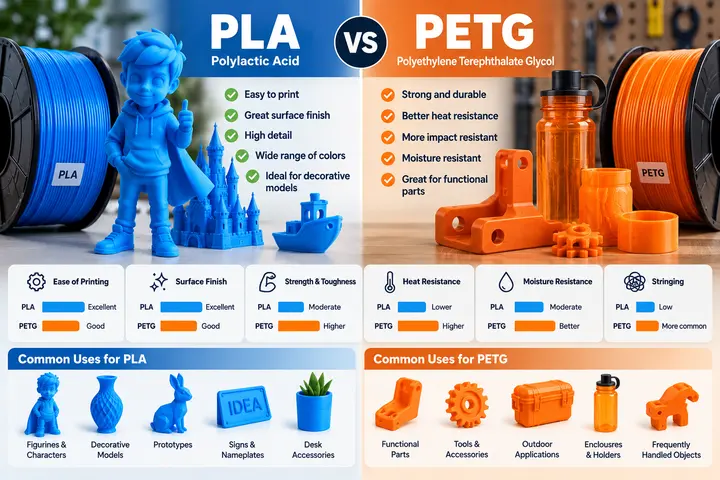
PLA (Polylactic Acid) is one of the most widely used materials in desktop 3D printing.
It is relatively easy to print, produces good surface quality, and works particularly well for models where appearance and detail are more important than resistance to heat or mechanical stress.
PLA is a good choice for:
- Figurines and character models
- Decorative objects
- Prototypes
- Desk accessories
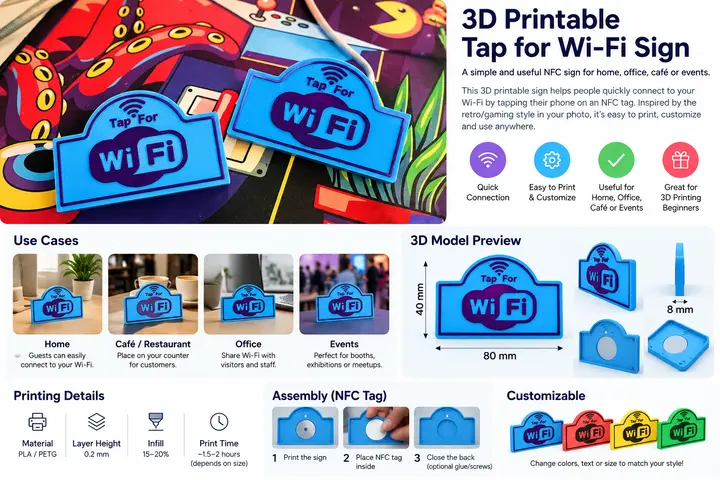
- Signs and nameplates
- Display models
- Indoor organizers
- Gifts and personalized products
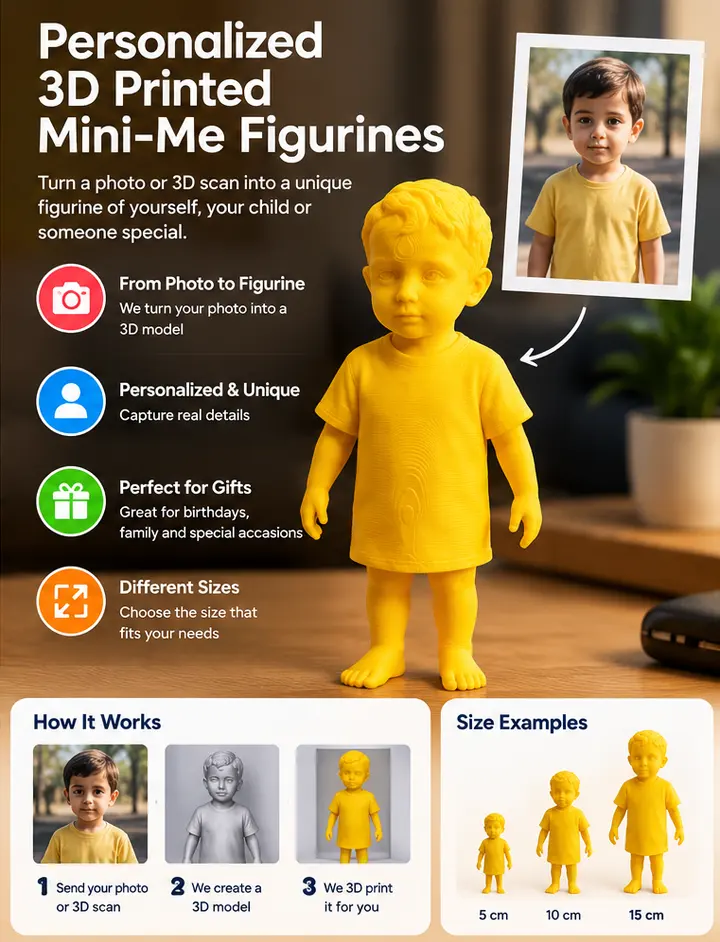
For example, a custom company mascot or personalized figurine usually doesn't need to withstand high temperatures or heavy mechanical loads. PLA can therefore be an excellent material for these applications.
What Is PETG?
PETG (Polyethylene Terephthalate Glycol-modified) is another popular 3D-printing material.
PETG is generally selected when the finished part needs more toughness, temperature resistance, or durability than a typical PLA print.
It can be useful for:
- Functional parts
- Brackets and holders
- Outdoor or semi-outdoor applications
- Protective components
- Parts exposed to moisture
- Workshop accessories
- Enclosures
- Frequently handled objects
PETG can be slightly more demanding to print cleanly, particularly because of stringing and its strong bed adhesion, but it is a very useful material for functional projects.
When Should You Choose PLA?
Choose PLA when your priority is appearance, detail, simplicity, and a clean print.
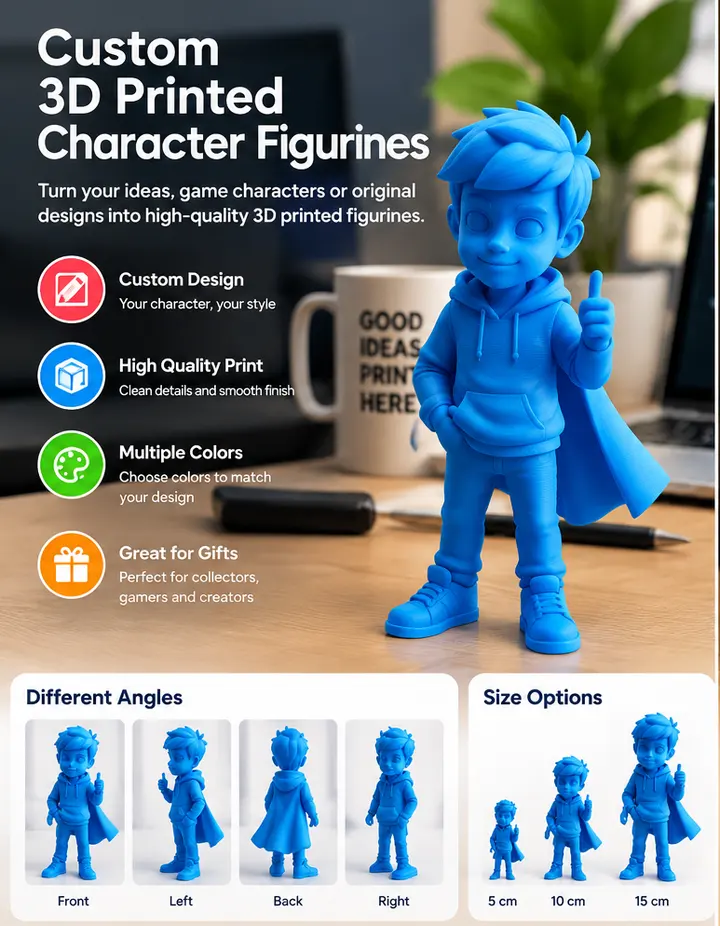
Imagine you're ordering a custom character figurine from Idea2Print3D. The model will spend most of its life sitting on a desk or shelf.
There is little reason to use a more demanding material simply because it sounds stronger.
PLA is often perfectly suitable.
The same applies to decorative signs, prototypes, personalized nameplates, display pieces, and many household prints.
When Should You Choose PETG?
Choose PETG when the object has a functional job and needs additional durability.
For example, imagine we're creating a custom bracket that will be handled regularly or used somewhere warmer than a normal indoor environment.
PETG may be the more appropriate choice.
Its additional toughness also makes it useful when a PLA part could be too brittle for the application.
What About Heat?
This is one of the most important differences.
PLA can soften or deform when exposed to sufficiently high temperatures. That makes it a poor choice for certain environments.
A classic example is a part left inside a hot car during summer. The interior of a parked vehicle can become considerably hotter than the surrounding outdoor temperature.
PETG generally handles elevated temperatures better than PLA.
That doesn't mean PETG is suitable for every high-temperature application—it isn't—but it gives you more thermal headroom for many everyday functional prints.
Which Has Better Print Quality?
PLA is usually easier when the goal is a visually clean model.
It works particularly well for figurines, architectural models, decorative prints, prototypes, and other objects containing visible details.
PETG can also produce excellent prints, but it has a greater tendency to create fine strings between different sections of a model if the printer and filament settings aren't properly tuned.
For a highly detailed decorative character, we would therefore often consider PLA first.
For a functional component, the mechanical advantages of PETG may be more important than achieving the cleanest possible cosmetic surface.
Is PETG Always Better Because It's Stronger?
No.
This is a common mistake when selecting 3D-printing materials.
The "stronger" material isn't automatically the better material.
Material selection should depend on the application.
If you're printing a decorative mascot for an office desk, additional toughness may provide very little practical benefit.
Similarly, choosing PLA for a component that will regularly experience heat or mechanical stress simply because PLA is easier to print may result in the wrong material being used.
The better question is:
What does this object need to do?
What Do We Use at Idea2Print3D?
There isn't one material that we use for every project.
For decorative models, characters, prototypes, signs, personalized products, and many indoor objects, PLA is often our starting point.
For functional objects where toughness, moisture resistance, or improved temperature resistance matters, PETG may be the better option.
Other materials may also be appropriate for more specialized applications.
The important part is matching the material to the product rather than selecting a filament based purely on popularity.
PLA or PETG: Which One Should You Pick?
A simple way to decide is:
Choose PLA for appearance, detail, and straightforward indoor prints.
Choose PETG when durability, toughness, moisture, or additional temperature resistance matters.
Neither material wins every comparison.
That's one of the interesting things about 3D printing: you aren't only choosing what to make. You can also choose what to make it from.
At Idea2Print3D, we consider both the design and its intended use before deciding which material makes sense for the final print.